
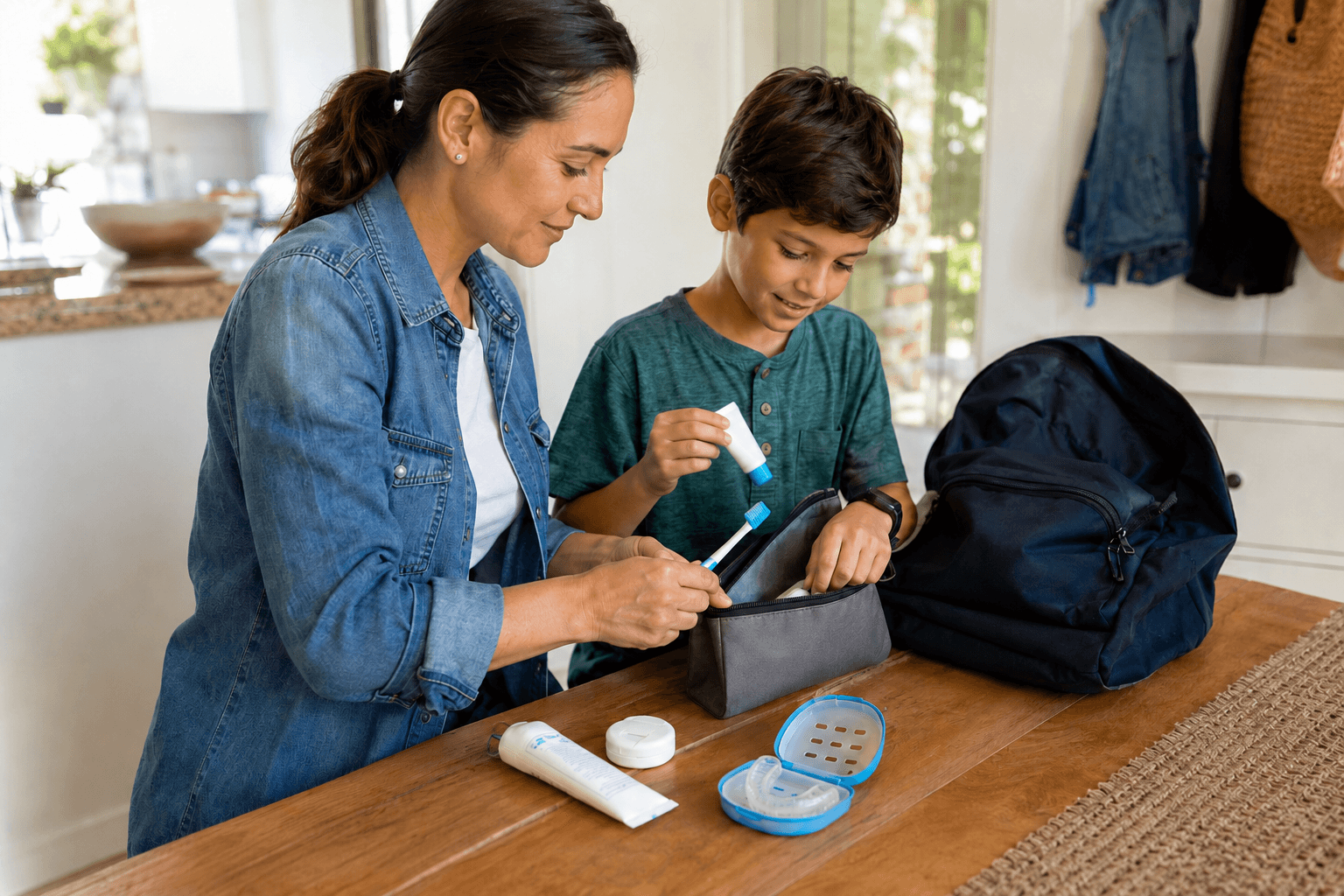
The start of a new school year is a great time to review your child’s dental routine, upcoming sports and preventive care needs with a regular dental checkup. That doesn’t mean every child needs a dental appointment before classes begin. The goal is to check whether a planned visit is due, replace worn home-care supplies and prepare for changes in the family schedule.
A simple back-to-school dental checklist can make these tasks easier to manage. Georgetown families can use the first few weeks of school to review brushing habits, plan portable snacks, ask about sports mouthguards and address dental concerns before they begin interfering with school or activities. Now is a great time to learn more about kids dentistry and how we can help you and your kids stay on track with their oral health.
Why Back-to-School Is a Useful Time to Review Oral Health
School changes the pace of family life. Mornings can become rushed, lunches are eaten away from home and after-school activities may leave less time for familiar routines. Children may also begin choosing more of their own snacks and drinks as they become independent.
Rather than trying to create a perfect routine, focus on habits your family can maintain. Check that brushing still fits comfortably into the morning and evening schedule. Make sure everyone has the supplies they need, and talk about what to do if a tooth starts hurting during the school day.
Sports deserve attention too. A child who joins a school or community team may need protective equipment that wasn’t part of the summer routine. Reviewing this early gives parents time to check activity rules and ask a dentist about mouthguard options when needed.
Dental Checkups and Cleanings: What Families Can Plan
Start by checking when your child last visited the dentist and whether the dental office recommended a particular return time. Dental visit schedules aren’t the same for every child. Timing may depend on oral health, cavity risk, dental development, home care and previous treatment.
A preventive appointment may include an examination of the teeth and gums, a review of oral-hygiene habits and a professional cleaning when appropriate. The dentist may also monitor how the teeth are developing and discuss concerns raised by the child or parent.
Families exploring preventative dentistry can ask what care is recommended for their child and why. An assessment is also an opportunity to discuss changes such as:
- New or recurring sensitivity
- Bleeding or tender gums
- Difficulty brushing a particular area
- A loose restoration
- Changes in the child’s bite
- A tooth that appears chipped, cracked or discoloured
- Concerns about developing adult teeth
Children shouldn’t wait for a scheduled checkup if they have pain, swelling or an injury. Contact the dental office and describe the problem so the team can advise you about an appropriate next step.
The beginning of school can also be helpful for children who are becoming more responsible for their own brushing. Through kids dentistry in Georgetown, families can ask age-appropriate questions about home care without assuming every child develops independence at the same pace.
Mouthguards for School and Community Sports
Mouthguards are designed to help protect the teeth and other oral tissues during activities where contact or falls may occur. They may be relevant for organized contact sports as well as activities where a child could be struck in the mouth.
Requirements vary between schools, leagues and sports. Parents can check the applicable equipment rules and ask a coach if they’re unsure. A dentist can discuss whether a mouthguard should be considered and which options may fit the child’s activity and oral development.
Common options include:
- Ready-made mouthguards: These are sold in set sizes and can be worn without individual shaping. Fit and comfort can vary.
- Boil-and-bite mouthguards: These are softened in hot water and shaped around the teeth according to the product instructions.
- Custom mouthguards: These are made using information recorded from the child’s mouth and designed for an individual fit.
No single option is automatically appropriate for every child. The decision may depend on fit, comfort, the sport, dental development and whether the child has braces or other dental appliances.
Before the season begins, inspect an existing mouthguard for tears, rough edges, distortion or changes in fit. Children’s mouths develop, so a guard that fit previously may no longer sit comfortably. Clean it according to the provided instructions, let it dry and store it in a ventilated case. A mouthguard shouldn’t be shared between children.
Cavity-Prevention Habits for Busy School Days
Cavity prevention depends on consistent habits over time. No routine can guarantee that a child will never develop a cavity, but regular home care and preventive dental visits can support oral health.
Encourage children to brush with fluoride toothpaste according to the directions provided by their dentist and the product label. Younger children may need hands-on help, while older children may still benefit from occasional reminders or supervision.
Cleaning between teeth may also be recommended where the toothbrush can’t reach effectively. The appropriate tool and technique can depend on the child’s age, coordination and spacing between the teeth. A dental professional can demonstrate an approach that suits the child.
School food choices don’t need to follow rigid rules. A practical approach is to pack a balanced lunch, include water and reduce how often teeth are exposed to sugary or sticky foods throughout the day. Frequent sipping or snacking can create repeated exposure, even when each serving seems small.
Water is a straightforward drink choice for school. If a child eats a sweet snack, having it as part of a planned meal or snack period may be more manageable than grazing on it repeatedly. Families can make these choices based on nutritional needs, school policies, allergies and what their child will realistically eat.
Evening brushing can become difficult when homework and activities run late. Linking it to an existing routine, such as changing into pyjamas, may make it easier to remember.
What to Pack in a Back-to-School Dental Kit
Most children won’t need a large collection of dental supplies at school. A small kit may be useful for an older child who can use and store the items safely and whose school permits it.
Depending on the child, the kit might include:
- A travel-sized toothbrush
- Fluoride toothpaste
- Floss or another recommended interdental tool
- A ventilated mouthguard case
- Orthodontic supplies recommended by the dental provider
- A reusable water bottle
Label personal items and remind children not to share toothbrushes, mouthguards or other oral-care products. Replace a travel toothbrush if the bristles become worn or if it has been stored improperly.
Brushing at school isn’t realistic or necessary for every family. A reliable morning and evening routine remains valuable. The kit should support the child’s needs without becoming another source of pressure.
A Simple Family Dental Checklist for the First Weeks of School
Use this checklist as a flexible planning tool:
- Check when each child last visited the dentist.
- Review the dentist’s recommended timing for the next visit.
- Contact the office about any pain, swelling, injury or damaged tooth.
- Replace toothbrushes with worn or frayed bristles.
- Check that fluoride toothpaste and other recommended supplies are available.
- Make sure younger children receive the brushing help they need.
- Review whether cleaning between the teeth has been recommended.
- Pack water and balanced snacks that fit the child’s needs.
- Ask which school or community sports require mouth protection.
- Inspect an existing mouthguard for wear, damage or poor fit.
- Label the mouthguard case and other personal supplies.
- Discuss what the child should do if a tooth is injured at school.
- Choose morning and evening brushing times that work with the new schedule.
You don’t need to complete every item at once. Start with anything related to pain, injury or a dental visit that is already due. Then work through the routine and supply updates as the school schedule settles.
Frequently Asked Questions About Back-to-School Dental Care
Should my child see a dentist before school starts?
Not necessarily. Follow the recall schedule recommended for your child rather than booking solely because school is starting.
Contact the dental office if you aren’t sure when the next visit is due or if your child has pain, sensitivity, swelling, an injury or another concern. A family dentist in Georgetown can explain whether an assessment should be considered based on the child’s needs.
Does every child who plays sports need a mouthguard?
Mouthguard needs depend on the activity, its level of contact, the risk of falls and any rules set by the school, league or governing organization.
A dentist can discuss available options and evaluate fit, particularly if the child has braces, dental appliances or changing teeth. The most appropriate option is one that suits the child’s mouth and activity and can be worn as directed.
How often should children have dental checkups?
There isn’t one interval that applies to every child. The recommended timing can vary based on oral health, cavity risk, dental development, home-care needs and previous findings.
Ask the dentist when your child should return and what factors shaped that recommendation. Contact the office sooner if a concern develops between planned visits.
What snacks are more tooth-friendly for school?
Water and balanced snacks that are lower in added sugars can be practical choices. Foods such as vegetables, cheese, plain yogurt or whole fruit may work for some families, depending on dietary needs and school allergy policies.
Frequency also matters. Repeatedly eating sticky or sugary foods throughout the day can expose the teeth more often. Keep the advice flexible and choose options your child can safely eat and is likely to finish.
When should I contact a dentist about a child’s tooth problem?
Contact a dentist if your child has persistent or worsening tooth pain, swelling, bleeding gums, a broken tooth, a mouth injury or another change that concerns you. These symptoms can have different causes, so they shouldn’t be diagnosed at home.
Seek urgent medical assistance for serious facial trauma, uncontrolled bleeding, difficulty breathing or swallowing, or rapidly worsening facial or neck swelling.
Plan Preventive Dental Care With a Family Dentist in Georgetown
A back-to-school dental checklist doesn’t need to add pressure to an already busy season. A few practical steps, such as checking whether a visit is due, replacing worn supplies and reviewing sports protection, can help families carry familiar habits into the school year.
If you have questions about your child’s checkup schedule, home-care routine or mouthguard options, contact Dentistry on Sinclair. The team can discuss preventive and children’s dental care and whether a visit may be appropriate for your child.

